Sanitary Dehumidification for Pharmaceutical Cleanrooms
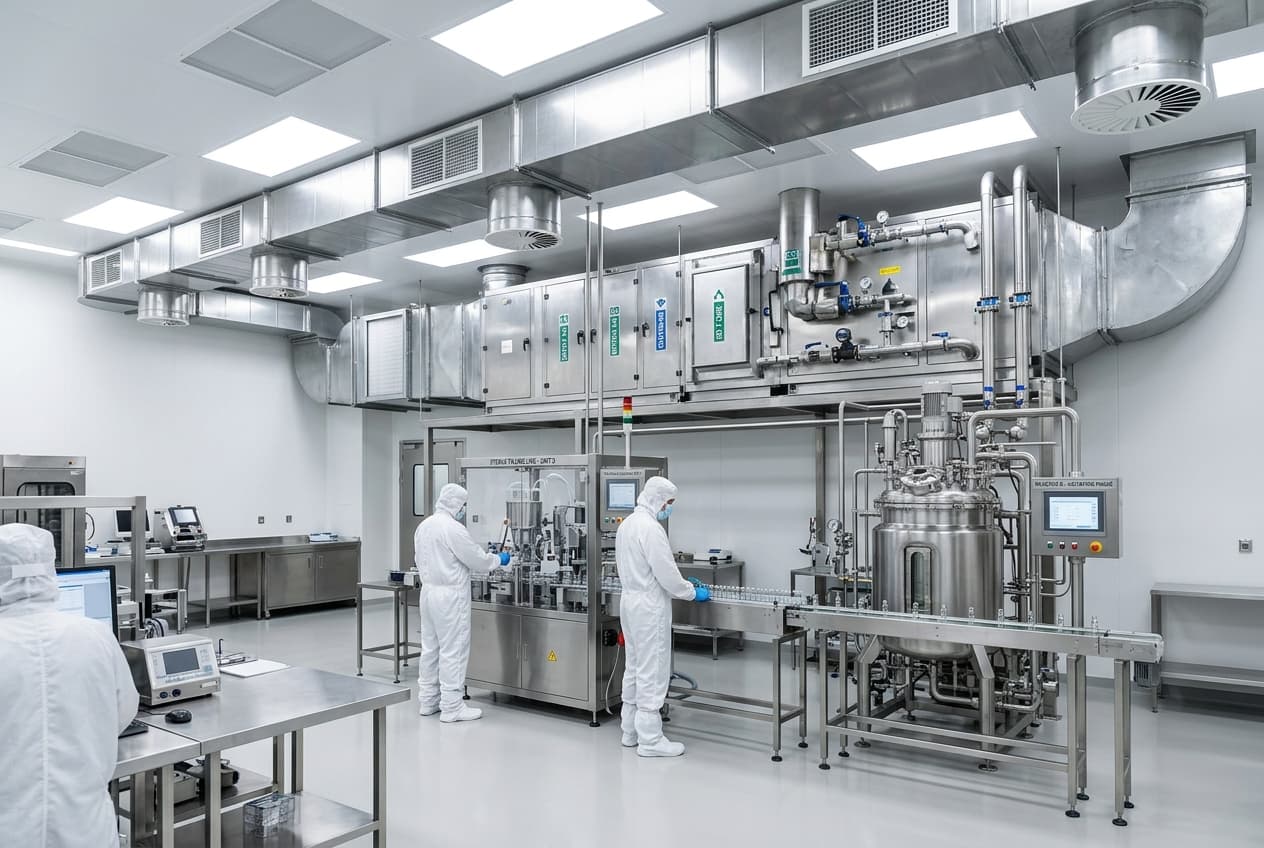
Sanitary Dehumidification for Pharmaceutical Cleanrooms
Maintaining environmental control in pharmaceutical manufacturing cleanrooms is a critical requirement for regulatory compliance and product quality. Active Pharmaceutical Ingredients (APIs) are highly hygroscopic and susceptible to ambient moisture. This case study details how SORPS Technologies designed and installed a custom desiccant dehumidification system for a major formulation plant in South India.
The Challenge
The client’s facility, located near Bangalore, experiences heavy monsoons where ambient relative humidity (RH) frequently exceeds 85%. The tablet compression and packaging zones required:
- A strict **30% RH (±3%)** at **21°C (±1°C)**.
- Continuous compliance with ISO Class 7 cleanroom standards (ISO 14644-1).
- High fresh air intake volume to meet ASHRAE 62.1 ventilation requirements.
- Strict sanitization protocols, meaning zero water accumulation or mold risk inside the air treatment unit (AHU).
Traditional refrigeration-based cooling systems could only pull humidity down to ~45% RH. Attempting to go lower resulted in evaporator coil frosting and excessive energy consumption.
The Solution
SORPS engineers proposed an integrated custom Desiccant Dehumidifier (DD-12000 Series) sanitary climate system:
- **Washable Silica Gel Rotor:** An active, water-washable silica gel desiccant wheel designed for maximum moisture adsorption without shedding particles.
- **Double-Skin Sanitary Cabinet:** Built with double-skinned 50mm polyurethane foam (PUF) insulation panels, an interior skin of AISI 304 stainless steel, and sloped condensate pans to eliminate standing water and facilitate clean washdowns.
- **HEPA Integration:** A terminal H14 HEPA filter section built directly into the process supply air stream, eliminating separate filter housing.
- **Heat Recovery wheels:** Integrated sensible air-to-air heat exchangers to recover energy from the reactivation exhaust, reducing heating power requirements.
The Sizing & Design Parameters
- **Process Air Volume:** 12,000 CMH
- **Reactivation Air Volume:** 3,500 CMH
- **Moisture Removal Capacity:** 82 kg/hour (at peak outdoor conditions)
- **Reactivation Heater Capacity:** 72 kW (Electric, thyristor-controlled)
- **Total Static Pressure:** 1200 Pa (Process) / 800 Pa (Reactivation)
The Results
Upon commissioning, the system successfully achieved the following performance results:
- **Stable Environment:** Maintained ambient RH consistently at **28% - 31%** and temperature at **20.8°C** even under peak outdoor monsoon moisture loads.
- **Zero Contamination:** Microbiological tests returned zero counts of mold or microbial bacteria, passing GMP audits and FDA review.
- **Audit Approval:** The client successfully cleared their regulatory inspection with zero observations related to HVAC moisture.
- **Energy Savings:** The integrated active energy recovery purge sectors reduced reactivation power consumption by **38%** compared to standard desiccant designs.